Acorn Squash
VegetableCucurbita pepo
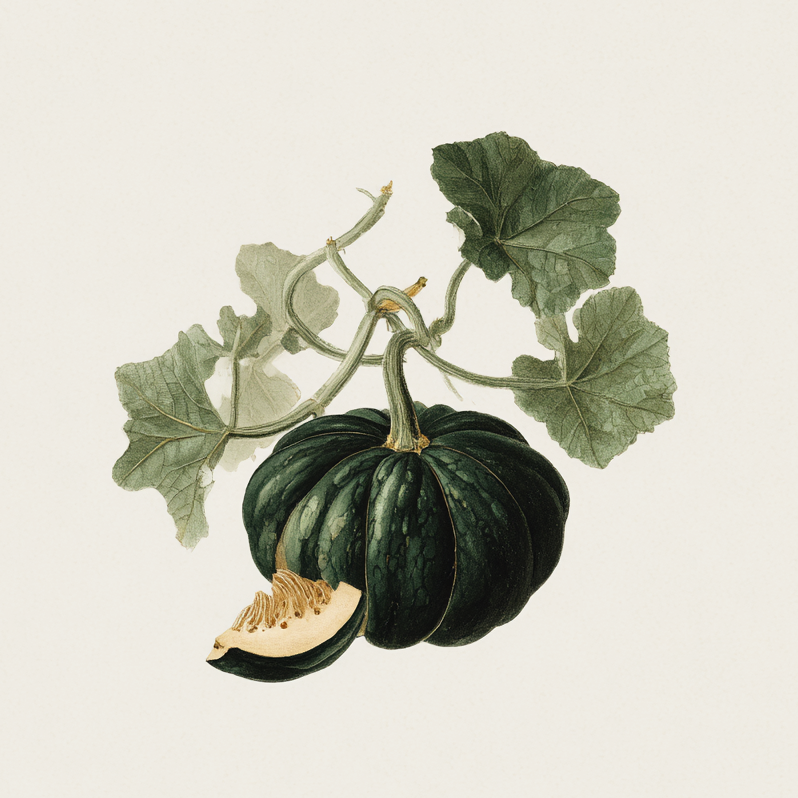
Have seeds for this? Add to inventory →Acorn squash is a compact, ribbed winter squash with sweet, mildly nutty flesh and a hard outer shell that ranges from deep green to golden or white at maturity. It grows on vigorous, sprawling vines and produces reliably in home gardens across most temperate climates. Its thick skin enables multi-month storage, making it a valuable cold-season kitchen staple long after frost ends the growing season.
Growing Conditions
Growing Conditions
Sunlight
Full Sun
Water Needs
Moderate
Soil
Rich, well-draining loam with high organic matter and a pH of 6.0–6.8
Spacing
36–48 inches
Days to Maturity
75–100 days from direct sow
Growing Zones
Growing Zones
Thrives in USDA Zones 3 - 10
When to Plant
When to Plant
Start Indoors
2–4 weeks before last frost date, in individual pots
Transplant
After last frost, when soil is consistently above 60°F
Direct Sow
After last frost, when soil has warmed to at least 60°F
Harvest
Harvest when skin is hard and deeply colored, stem has dried and corked, and the rind resists puncture from a thumbnail; typically 75–100 days from sowing
Phenology (Natural Timing Cues)
Start Indoors
Squash seeds germinate quickly and seedlings grow fast; starting too early produces root-bound, leggy plants that struggle after transplant. Begin seeds indoors only 2–4 weeks before the last frost date. Starting in individual 3–4 inch pots prevents root disturbance at transplant time, which squash resents.
- Forsythia blooms and fades, signaling the approach of last frost
- Dandelions bloom actively in lawns
- Nighttime temperatures rarely drop below 40°F
- Soil outdoors is beginning to drain and warm
Direct Sow
Acorn squash is best direct-sown once soil has warmed reliably to 60°F or above and frost risk has passed; cold soil causes poor germination and invites seed rot. Sow seeds 1 inch deep in hills or rows once the season is firmly established. Jumping the window by even a week in cold soil can cost the entire planting.
- Soil temperature at 3-inch depth reads 60°F or warmer on a soil thermometer
- Oak leaves are approaching full size, indicating reliably warm conditions
- Active lawn growth is underway and tender annual weeds are germinating freely
- Nights are consistently above 50°F and frost is no longer forecast
Start Dates (Your Location)
Average dates use your saved zone; readiness also checks your forecast when available.
Average Last Frost
Set your growing zone to see personalized calendar dates.
Use the average timing, but check your local forecast before planting.
Typical Harvest Window
August to October
Organic Growing Tips
Organic Growing Tips
Side-dress plants with a 1-inch layer of finished compost or worm castings when vines begin to run, providing a slow-release nutrient boost that supports fruit set without excessive leafy growth
Apply compost tea as a foliar spray every 2–3 weeks to strengthen leaf defenses against powdery mildew, which commonly afflicts squash in humid conditions
Mulch with 3–4 inches of straw once soil has warmed fully; this conserves moisture, suppresses weeds, and keeps developing fruit off wet soil to prevent rot
Interplant with nasturtiums and borage to attract pollinators and deter aphids and squash beetles through aromatic companion planting
Hand-pollinate early-season female flowers on cool mornings using a small brush or by transferring pollen from a male flower if pollinator activity is low, ensuring reliable fruit set
At season's end, chop and compost spent vines unless they show mildew; infected material should be hot-composted or removed to break disease cycles
Care Guidance
Optional seasonal guidance for what you can do, even when nothing is urgent.
Care Guidance
Watering
If the top 2 inches of soil feel dry, a deep watering at the base may help more than frequent light watering. In healthy soil, rain may cover much of what it needs.
Feeding
If growth is strong, compost-rich soil often carries most of the load. If the plant starts looking pale or stalls, a light compost top-dressing or gentle organic feed may help.
Seasonal care
During the main season, harvesting when the crop is ready and removing damaged growth can help keep the planting productive if it starts to look crowded or tired.
Harvest timing
Harvests often cluster around August to October. If fruit, leaves, or roots start looking ready, color, size, firmness, and scent usually tell you more than the calendar alone.
Known Varieties
Common cultivars worth knowing
Known Varieties
Table Queen
The classic dark green acorn squash variety, widely available and reliable, with sweet orange flesh and excellent storage life.
Best for
All-purpose home garden production and long-term storage
Honey Bear
An AAS Award-winning compact bush variety producing small, single-serving fruits; shorter vines make it suitable for smaller gardens.
Best for
Small gardens and container-adjacent beds where full-sized vines are impractical
Carnival
A colorful hybrid with cream, orange, and green mottled skin; milder, slightly sweet flesh and attractive appearance at market and table.
Best for
Decorative display and fresh eating
Thelma Sanders Sweet Potato
An heirloom variety with cream-colored skin and exceptionally sweet, fine-grained flesh; considered among the best-flavored acorn types.
Best for
Flavor-focused growers seeking an open-pollinated heirloom for seed saving
Delicata (Sweet Potato Squash)
Though technically a distinct type within Cucurbita pepo, Delicata is closely related and offers thin, edible skin in a cream-and-green striped package; matures slightly earlier than most acorn types.
Best for
Short-season gardens and growers who prefer edible skin without peeling
Companion Planting
Companion Planting
Support & insectary plants
Nearby plants that attract pollinators, beneficial insects, or improve soil health.
- Nasturtium
Trap crop for aphids; attracts beneficial insects
- Borage
Attracts beneficial insects and produces nutrient-rich mulch
Common Pests
Common Pests
All pest management in Garden uses safe, organic, non-toxic methods only. No synthetic pesticides, ever.
Simple Ways to Use
Simple Ways to Use
Start here if you're not sure how to use this crop in the kitchen.
Quick recipes you can make right away
Roasted Acorn Squash Halves
Halve the squash, scoop out the seeds, and roast cut side down at 400°F for 35 to 50 minutes until the flesh is tender enough to pierce easily with a fork. Turn the halves over for the last few minutes if you want the cut face lightly browned.
Baked Acorn Wedges
Cut the squash into wedges, brush lightly with oil, and bake at 400°F for 30 to 40 minutes until the edges brown and the thickest part turns tender. Turn the wedges once so both sides cook evenly.
Acorn Squash Mash
Roast the halves until very soft, scoop out the flesh, and mash it with butter and salt while still warm. The mash is ready when no firm chunks remain and the flesh looks smooth instead of stringy.
How to Preserve
How to Preserve
Use this section to store or process extra harvest before it spoils.
Practical methods for extra harvest
Cure acorn squash
Keep freshly harvested squash warm and dry for 10 to 14 days, ideally around 80°F if you can manage it, until the rind hardens and minor scratches dry over. Do not wash the fruit before curing, because surface moisture encourages rot.
Freeze cooked acorn squash
Roast the squash until fully soft, scoop out the flesh, and cool it completely before freezing it mashed or in chunks. Freeze in recipe-size portions so you can thaw only what you need for soup, mash, or baking.
Roast and store seeds
Rinse the seeds clean of stringy pulp, dry them briefly on a towel, then roast at 300°F for 20 to 30 minutes until crisp and no longer leathery in the center. Cool them fully before jarring so trapped steam does not soften them again.
New to preserving food?
New to freezing? Read the freezing guide.New to dehydrating? Read the dehydrating guide.How to Store
How to Store
Simple storage tips
Store cured acorn squash in a cool dry place with airflow, ideally around 50°F to 55°F if possible.
Keep the fruits from touching if you can, because one rotting squash can spread problems quickly.
Do not stack them deeply, because bruises shorten storage life.
Check stored squash often and use any with soft spots, leaking, or mold first.
Once cut, wrap the squash and refrigerate it, then use it within a few days.
How to Save Seed
How to Save Seed
Step-by-step seed saving
- 1
If the packet or tag says F1 hybrid, saved seed may not stay true. Open-pollinated acorn squash is the better choice if you want similar fruit next year.
- 2
Save seed only from a fully mature squash with hard rind and good eating quality, because immature fruit gives weak seed.
- 3
Scoop out the seeds, rinse away the pulp, and dry them in a thin layer until they feel hard and snap instead of bending.
- 4
Acorn squash can cross with compatible squash nearby, so isolate plants if you want cleaner seed or expect some variation in the next generation.
Native Range
Native Range
- Origin
- Cucurbita pepo was domesticated in Mesoamerica, with archaeological evidence placing the earliest cultivation in southern Mexico and Central America at least 8,000 years ago.
- Native Habitat
- Wild ancestors grew in seasonally dry tropical and subtropical forest margins and disturbed clearings where warm soils, ample sun, and moderate moisture favored sprawling vines.
- Current Distribution
- Now cultivated on every inhabited continent, acorn squash is grown as an annual warm-season crop in temperate, subtropical, and tropical regions worldwide, with no wild self-sustaining populations.
Taxonomy
Taxonomy
- Kingdom
- Plantae
- Family
- Gourd family (Cucurbitaceae)
- Genus
- Cucurbita
- Species
- pepo
Morphology
Morphology
Root System
Acorn squash develops a shallow but wide-spreading fibrous root system; avoid deep cultivation near plants once vines run, as root damage causes wilting and slows fruit development.
Stem
Vines are coarse, hollow, and covered in stiff hairs, reaching 6–10 feet or more; in small gardens, train vines deliberately or select bush-type varieties to manage space.
Leaves
Large, deeply lobed leaves with a rough, sandpapery texture are characteristic; yellowing older leaves are normal as fruit matures, but powdery white coating on upper leaf surfaces indicates powdery mildew and warrants immediate attention.
Flowers
Plants produce separate male and female flowers on the same vine; male flowers appear first and have a simple stem, while female flowers carry a tiny immature fruit at the base - th require active bee visitation or hand pollination for fruit set.
Fruit
The ribbed, acorn-shaped fruit is ready to harvest when the skin has hardened fully, the portion resting on soil turns orange, and the stem dries to a corky, tan texture; cured at room temperature for 1–2 weeks, acorn squash stores well for 2–3 months.
Natural History
Natural History
Acorn squash belongs to Cucurbita pepo, a species domesticated in Mesoamerica at least 8,000 years ago and among the earliest cultivated plants in the Americas. Indigenous peoples of what is now the eastern and central United States developed the acorn-type squash form long before European contact, integrating it into the celebrated Three Sisters polyculture alongside corn and beans. Spanish and Portuguese explorers carried Cucurbita pepo to Europe in the 16th century, from which it spread globally. The plant sets distinct male flowers before female flowers appear, so early-season fruit set is often delayed until pollinator populations catch up - behavior growers can short-circuit with hand pollination.
Traditional Use
Traditional Use
Indigenous peoples of North America and Mesoamerica documented uses for various parts of Cucurbita pepo squashes beyond food, including seeds and flesh in traditional contexts recorded by early ethnobotanists. The seeds in particular were noted across multiple cultures for their historical role in folk practice. These records reflect traditional agricultural societies in which squash was among the most culturally central crops.
Parts Noted Historically
Mesoamerican Indigenous peoples, pre-Columbian and post-contact periods - seeds
Ethnobotanical records document that seeds of Cucurbita pepo were historically used in Mesoamerican folk contexts, with early Spanish colonial-era accounts noting their presence in traditional domestic practices alongside food use.
Eastern Woodland Indigenous peoples, recorded 17th–19th centuries - flesh and seeds
Early European naturalists and ethnographers documented that various Woodland nations incorporated squash flesh and seeds into traditional practices; squash occupied a foundational role in subsistence and ceremonial life, and these records note its presence in both culinary and non-culinary household uses.
Acorn squash flesh and seeds are broadly safe as food. Rarely, bitter-tasting squash fruit can result from stress-induced cucurbitacin accumulation, which may cause gastrointestinal discomfort if eaten; fruit with notably bitter flavor should be discarded.
This information is provided for historical and educational purposes only and is not medical advice. Always consult a qualified healthcare professional before making decisions related to your health.
Loading photo submission…