Big Bluestem
FlowerAndropogon gerardii
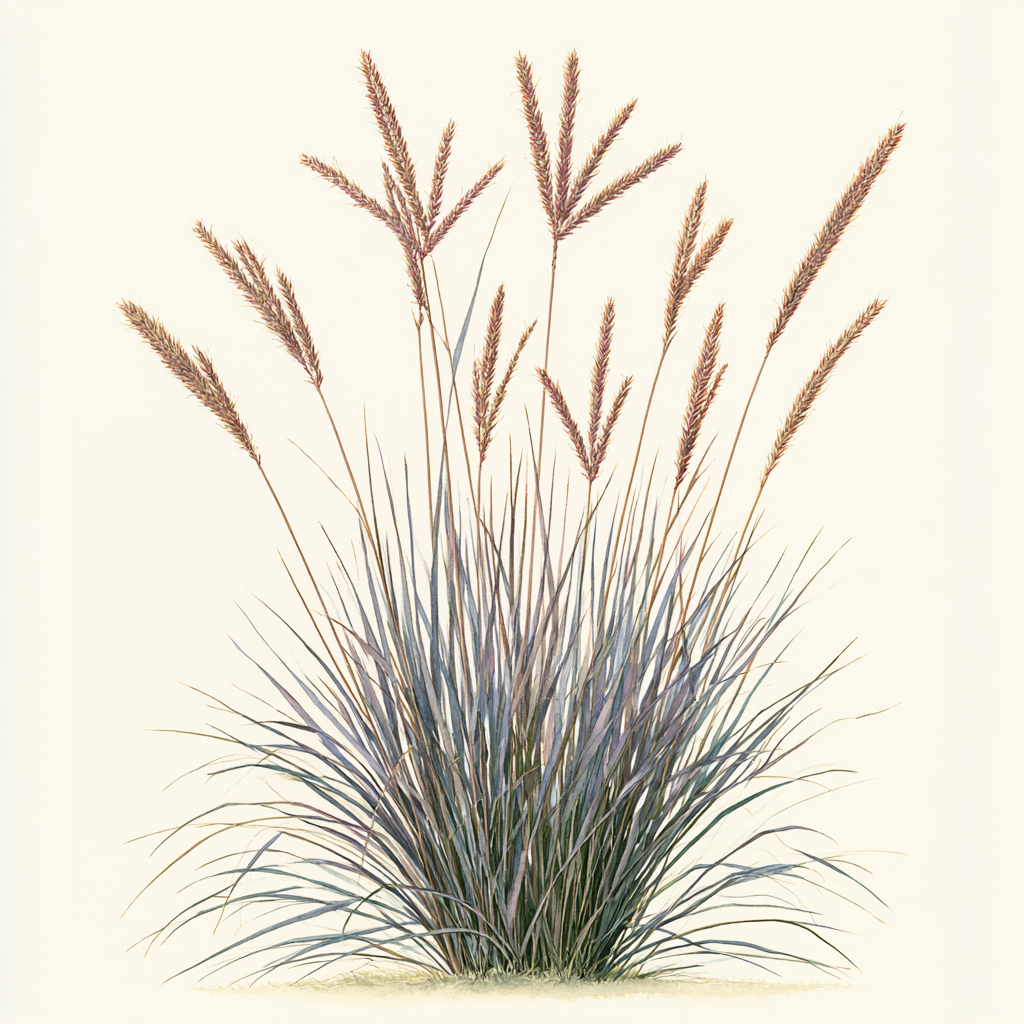
Have seeds for this? Add to inventory →Big Bluestem is the iconic tallgrass prairie grass of North America, reaching 4-8 feet in height with distinctive three-pronged seed heads that earn it the nickname 'turkey foot.' Its blue-green summer foliage turns rich copper, burgundy, and orange in fall, making it a standout in naturalistic plantings. Extremely drought-tolerant once established, it anchors prairie gardens and supports an exceptional range of native wildlife.
Growing Conditions
Growing Conditions
Sunlight
Full Sun
Water Needs
Low
Soil
Well-draining; tolerates clay, sandy, or poor soils; pH 5.5–7.5
Spacing
18–24 inches
Days to Maturity
Establishes slowly in year 1; reaches full height (4–8 feet) by year 2–3
Growing Zones
Growing Zones
Thrives in USDA Zones 3 - 9
When to Plant
When to Plant
Direct Sow
Sow in early spring or fall; cold stratification improves germination; press seed lightly into soil surface
Harvest
Cut stems to 4–6 inches in late winter before new growth emerges
Phenology (Natural Timing Cues)
Direct Sow
Big Bluestem can be sown in early spring once soil is workable and no longer frozen, or in fall as a dormant seeding that undergoes natural cold stratification over winter. Spring-sown seed benefits from at least 60 days of moist cold stratification beforehand; skipping this step dramatically reduces germination rates. Fall dormant seeding is often the most reliable method, timing sowing after hard freezes end active germination so seeds wait until spring.
- Soil is workable and draining cleanly after winter frost heave (spring sowing)
- Dandelions are in full bloom and soil surface has warmed to at least 55°F (spring sowing)
- Hard frosts have arrived and annual weeds have died back (fall dormant sowing)
- Leaf drop is complete on deciduous trees nearby (fall dormant sowing)
Start Dates (Your Location)
Average dates use your saved zone; readiness also checks your forecast when available.
Average Last Frost
Set your growing zone to see personalized calendar dates.
Use the average timing, but check your local forecast before planting.
Direct Sow Window
Early spring
Use the seasonal timing note for this plant.
Typical Harvest Window
January, February, September, October, November, December
Organic Growing Tips
Organic Growing Tips
Do not fertilize - lean soils produce the best form and color; excess nitrogen causes lodging.
Burn or cut back in late winter rather than fall to preserve winter wildlife habitat.
Slow to establish - resist pulling what looks like a failed planting in year 1.
Once established, big bluestem is nearly impossible to kill and requires no irrigation.
Care Guidance
Optional seasonal guidance for what you can do, even when nothing is urgent.
Care Guidance
Watering
Extra watering is often only useful during extended dry periods. If the top 2 to 3 inches are still holding moisture, additional water may not help.
Feeding
Extra feeding is rarely required if soil is healthy. If growth looks pale or slow, a light compost top-dressing is often enough before adding anything stronger.
Seasonal care
In late fall, a light cleanup and fresh mulch can help if winter protection is useful in your climate. Leaving a little space around crowns and trunks often helps air move and keeps excess moisture from sitting there.
Harvest timing
Harvests often cluster around January, February, September, October, November, December. If fruit, leaves, or roots start looking ready, color, size, firmness, and scent usually tell you more than the calendar alone.
Known Varieties
Common cultivars worth knowing
Known Varieties
Rain Dance
A compact selection reaching 4–5 feet rather than the species' full 6–8 feet, with excellent blue summer color and reliable fall red-orange tones; more manageable in smaller garden spaces.
Best for
Smaller prairie gardens and front-of-border placements
Blackhawks
Known for exceptionally dark burgundy-purple fall color, among the deepest of any big bluestem selection; full species height of 5–7 feet.
Best for
Bold fall color and ornamental prairie plantings
Red October
Selected for intense scarlet-red fall foliage color that persists longer into winter than the straight species; vigorous and heat-tolerant.
Best for
Warm climates and extended fall display
Pawnee Buttes
A spreading, semi-prostrate form naturally found in Colorado shortgrass prairie; reaches only 18–24 inches tall and sprawls outward, functioning more like a groundcover than an upright grass.
Best for
Low-water groundcover applications and slopes
Companion Planting
Companion Planting
Good companions
- Purple Coneflower
Support & insectary plants
Nearby plants that attract pollinators, beneficial insects, or improve soil health.
- Black-Eyed Susan
Attracts pollinators and beneficial insects
- Butterfly Milkweed
Attracts pollinators
- Wild Bergamot
Attracts pollinators and beneficial insects
- Coreopsis
Attracts pollinators
Avoid planting near
No known conflicts
Common Pests
Common Pests
- Rust Fungus
- Scale Insects
All pest management in Garden uses safe, organic, non-toxic methods only. No synthetic pesticides, ever.
Native Range
Native Range
- Origin
- Native to the tallgrass and mixed-grass prairies of central North America, ranging from southern Canada through the Great Plains to Texas and east into the eastern meadow regions of the United States.
- Native Habitat
- Naturally dominant in deep-soil tallgrass prairies, open meadows, and dry to mesic grasslands; thrives in full sun with well-drained to moderately moist soils and tolerates periodic fire and drought.
- Current Distribution
- Persists natively across remnant prairie landscapes of the central United States and Canada; widely cultivated in prairie restoration, naturalistic landscaping, and ecological planting projects across its native range and beyond.
Taxonomy
Taxonomy
- Kingdom
- Plantae
- Family
- Grass Family (Poaceae)
- Genus
- Andropogon
- Species
- gerardii
Morphology
Morphology
Root System
Exceptionally deep fibrous root system reaching 6–12 feet into the soil, making transplanting of established plants difficult but conferring extreme drought tolerance; roots are the primary carbon and nutrient storage organ and explain the slow first-year top growth.
Stem
Stout, upright culms reach 4–8 feet tall by late summer, developing a distinctive blue-green color at the base that gives the plant its common name; stems remain upright through winter, providing structure and wildlife habitat.
Leaves
Flat, arching blue-green blades 12–24 inches long that develop vivid copper, burgundy, and orange tones in fall; yellowing or rust-colored spotting mid-season can indicate rust fungus pressure, especially in humid conditions with poor airflow.
Flowers
Branched seed heads with three to five finger-like spikes resembling a turkey's foot emerge in late summer, attracting native bees and providing seeds for grassland birds through fall and winter.
Fruit
Narrow, hairy achenes ripen in fall and self-sow moderately; seed viability is improved by cold stratification, and the seeds are a documented food source for sparrows, juncos, and other grassland birds.
Natural History
Natural History
Big Bluestem is native to the tallgrass prairie of central North America, historically forming the dominant grass across tens of millions of acres from southern Canada to Texas. The species name honors Louis Gérard, an 18th-century French botanist. Before European settlement, vast herds of bison grazed and wallowed among big bluestem, and Indigenous nations across the Great Plains relied on the deep-rooted grass as a marker of rich soils and as forage for horses. Its extraordinary root system - often reaching 8–12 feet deep - allows it to endure drought, fire, and overgrazing and makes it a powerful soil-building and carbon-sequestering presence in restored prairie gardens.
Traditional Use
Traditional Use
Several Plains nations recorded practical uses for big bluestem, primarily involving the stems and leaves in utilitarian and ceremonial contexts rather than as a primary medicinal plant. The Lakota and other nations noted the grass as a reliable indicator of fertile, deep soils suitable for encampment. Ethnobotanical records describe limited documented medicinal uses compared to the plant's dominant role as forage, fiber, and ecological landmark.
Parts Noted Historically
Lakota (Teton Sioux), Great Plains, pre-20th century - stems and leaves
Ethnobotanical records document Lakota use of big bluestem stems as a material reference for identifying prime bison grazing lands and campsites; the grass itself was not a primary medicinal resource in recorded Lakota plant knowledge.
Omaha and Ponca peoples, Great Plains - leaves
Melvin Gilmore's 1919 ethnobotanical survey of Plains peoples noted big bluestem as a culturally recognized prairie dominant whose presence signaled deep, moisture-retaining soils, valued for practical site selection rather than documented medicinal preparation.
Big bluestem is not known to be toxic to humans or livestock; it is a major historical forage grass. Pollen may contribute to late-summer grass pollen allergies in sensitive individuals.
This information is provided for historical and educational purposes only and is not medical advice. Always consult a qualified healthcare professional before making decisions related to your health.
Loading photo submission…