Crimson Clover
FlowerTrifolium incarnatum
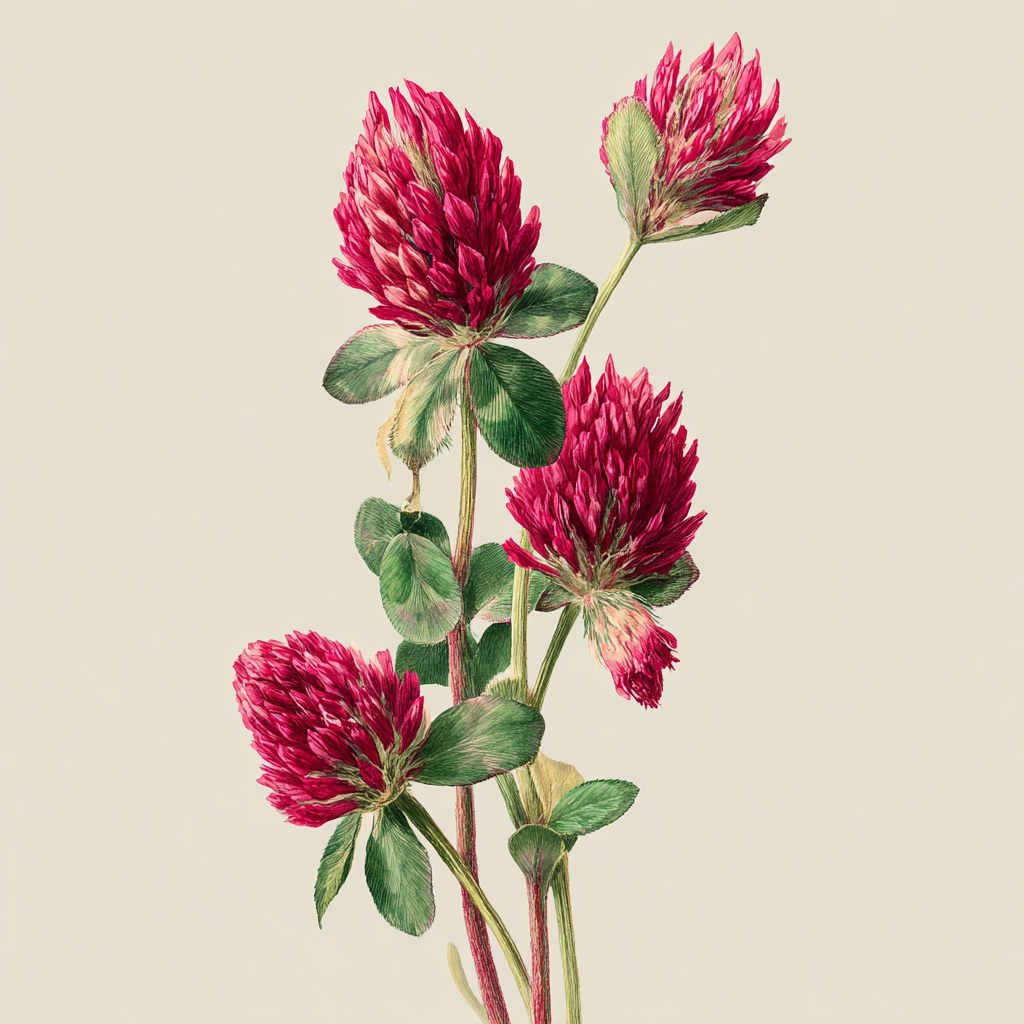
Have seeds for this? Add to inventory →Crimson clover is the most widely used winter annual legume cover crop for home gardeners, combining genuine soil-building power with striking ornamental beauty. It fixes atmospheric nitrogen through root-nodule bacteria, smothers winter weeds, and produces brilliant scarlet-crimson flower spikes that draw bumblebees, honeybees, and beneficial insects in exceptional numbers. Flowers and young leaves are edible and mildly sweet. Sow in late summer to early autumn on cleared beds and let it work through winter; terminate and incorporate before spring planting to release its stored nitrogen.
Growing Conditions
Growing Conditions
Sunlight
Full Sun
Water Needs
Low to Moderate
Soil
Adaptable; prefers well-draining loam or clay loam, pH 6.0 - 7.0; tolerates poor soils where other cover crops struggle
Spacing
Broadcast at 1-2 oz per 100 sq ft; no thinning required
Days to Maturity
60 - 90 days to flowering; terminate before seed set
Growing Zones
Growing Zones
Thrives in USDA Zones 5 - 10
When to Plant
When to Plant
Direct Sow
Broadcast seed on cleared beds and rake in lightly; sow 8-10 weeks before first expected hard frost for best nitrogen fixation. Zones 5-6: sow mid-August to September 1. Zones 7-8: sow September through mid-October. Zones 9-10: sow October through November.
Harvest
Not typically harvested for food; terminate by mowing close to the soil and incorporating, or by tarping, 2-4 weeks before spring planting. Incorporate when plants are in bud for maximum nitrogen return.
Phenology (Natural Timing Cues)
Direct Sow
Crimson clover is almost exclusively an autumn-sown cover crop in most of North America. It germinates quickly in warm late-summer soil, establishes a dense rosette through autumn, overwinters as a low mat in zones 5-8 (surviving to about 0-5°F), then surges upward in early spring to produce its signature crimson flower spikes. Terminate in bud stage (before flowers open) to capture peak nitrogen content in the biomass.
- Summer crops have been cleared and the bed is empty.
- Nighttime temperatures are regularly below 65°F.
- At least 8 weeks remain before the average first hard frost.
Start Dates (Your Location)
Average dates use your saved zone; readiness also checks your forecast when available.
Average Last Frost
Set your growing zone to see personalized calendar dates.
Use the average timing, but check your local forecast before planting.
Organic Growing Tips
Organic Growing Tips
Avoid mowing crimson clover while bees are actively foraging on the flowers; mow in early morning or evening if bees are present.
If leaving some plants to flower for pollinators, remove them before they fully set seed to prevent reseeding in unwanted areas.
In zones 5-6, a light straw mulch over newly sown seed helps retain moisture during germination in late-summer heat.
Care Guidance
Optional seasonal guidance for what you can do, even when nothing is urgent.
Care Guidance
Watering
If dry weather lingers, let the top 2 inches start to dry before watering again. This plant often responds better to an occasional deep soak than to frequent light watering.
Feeding
Extra feeding is rarely required if soil is healthy. If growth looks pale or slow, a light compost top-dressing is often enough before adding anything stronger.
Seasonal care
During the main season, harvesting when the crop is ready and removing damaged growth can help keep the planting productive if it starts to look crowded or tired.
Known Varieties
Common cultivars worth knowing
Known Varieties
Common Crimson Clover
The standard agricultural type; widely available in bulk from cover crop seed suppliers. Reliable nitrogen fixer with classic crimson flower spikes.
Best for
General cover cropping; most widely available
Dixie
Earlier-maturing variety developed in the southeastern US; sets seed faster, which is useful where a shorter growing window is available but requires more timely termination.
Best for
Zones 7-9; short autumn windows
Contea
Italian variety with large flower heads and vigorous growth; often preferred by gardeners who want ornamental value alongside soil benefit.
Best for
Ornamental use; pollinator gardens
Companion Planting
Companion Planting
Good companions
None noted
Support & insectary plants
Nearby plants that attract pollinators, beneficial insects, or improve soil health.
- winter-rye
Fixes nitrogen in soil
- hairy-vetch
Nitrogen-fixing; attracts pollinators
- oats
Fixes nitrogen in soil
Avoid planting near
No known conflicts
Common Pests
Common Pests
- Clover Root Weevil
- Aphids
All pest management in Garden uses safe, organic, non-toxic methods only. No synthetic pesticides, ever.
Native Range
Native Range
- Origin
- Native to the Mediterranean region of southern Europe, from Portugal and Spain east through Italy, Greece, and the Balkans.
- Native Habitat
- Open grasslands, field margins, roadsides, and disturbed ground in the Mediterranean climate zone; prefers well-drained soils in sunny, open situations.
- Current Distribution
- Widely naturalized and cultivated across temperate regions worldwide; a standard cover crop in North America, northern Europe, Australia, and New Zealand.
Taxonomy
Taxonomy
- Kingdom
- Plantae
- Family
- Legume family (Fabaceae)
- Genus
- Trifolium
- Species
- Trifolium incarnatum
Morphology
Morphology
Root System
Taproot with extensive lateral roots bearing Rhizobium nitrogen-fixing nodules; roots penetrate 12-18 inches in well-drained soil.
Stem
Hollow, hairy stems 12-36 inches tall when flowering; sprawling low rosette through winter, erect in spring.
Leaves
Three-parted (trifoliate) leaves, each leaflet oval with a pale chevron marking; softly hairy on both surfaces.
Flowers
Dense, elongated cylindrical spikes of 50-200 individual florets in brilliant crimson-scarlet; blooms April-June depending on zone. Highly attractive to bumblebees and honeybees.
Fruit
Single-seeded pods enclosed in the dried calyx; seed is small, yellowish-tan.
Natural History
Natural History
Trifolium incarnatum is native to the Mediterranean region of southern Europe, from Portugal east through Italy and the Balkans. It was cultivated as a fodder crop in southern European agriculture from at least the 17th century and spread northward as its value as both a forage and soil-improvement crop became established. Introduction to North America accompanied European agricultural settlement, and by the late 19th century it was widely recommended by agricultural extension services as a winter cover crop across the southeastern and mid-Atlantic United States. Its adoption by organic and sustainable agriculture movements in the late 20th century made it one of the standard reference species for cover cropping education, and it remains the most commonly recommended entry-level cover crop for home gardeners because of its reliability, beauty, and genuine agronomic benefit.
Loading photo submission…