Edamame
VegetableGlycine max
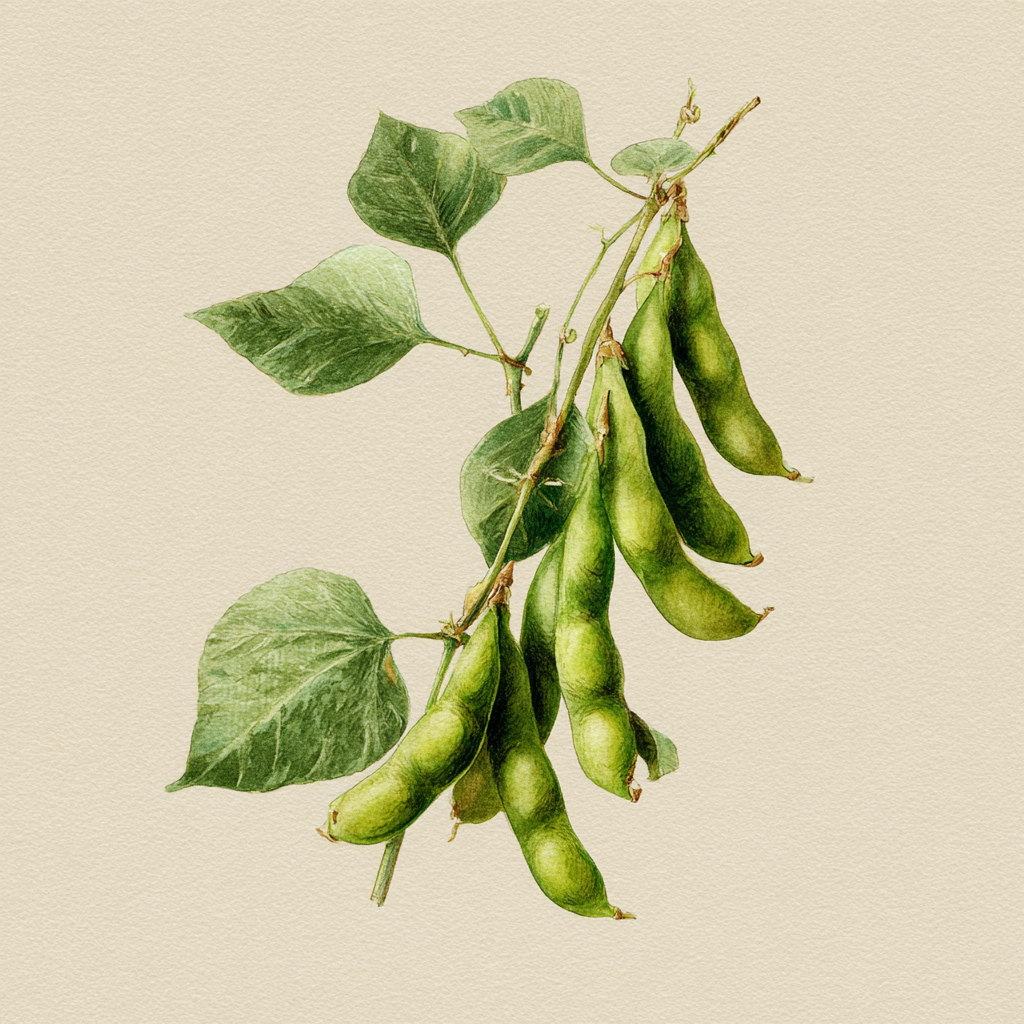
Have seeds for this? Add to inventory →Edamame is fresh soybean harvested green and immature, boiled in the pod and salted - one of the most satisfying crops to grow and eat in the summer garden. As a nitrogen-fixing legume it improves soil fertility for following crops. Plants are compact, productive, and rewarding for beginners.
Growing Conditions
Growing Conditions
Sunlight
Full Sun
Water Needs
Moderate
Soil
Well-draining loam; pH 6.0 - 6.8; avoid excess nitrogen
Spacing
4 - 6 inches
Days to Maturity
75 - 90 days from direct sow
Growing Zones
Growing Zones
Thrives in USDA Zones 3 - 10
When to Plant
When to Plant
Direct Sow
After last frost, soil 65°F+
Harvest
75 - 90 days; harvest when pods are plump and bright green before they yellow
Phenology (Natural Timing Cues)
Direct Sow
Edamame needs genuinely warm soil to germinate reliably - 65°F at planting depth minimum, with warm nights above 50°F. Cold soil causes rot rather than germination. Sow in succession every 3 weeks through summer for a continuous harvest. Pods must be caught at exactly the right moment: bright green, plump, and firm; once they start yellowing they become starchy dry beans rather than sweet edamame.
- Lilacs have faded and soil at planting depth feels warm.
- Night temperatures are staying reliably above 50°F.
- Tender annual weeds are growing vigorously without cold setback.
- Last frost is at least 2 weeks behind you.
Start Dates (Your Location)
Average dates use your saved zone; readiness also checks your forecast when available.
Average Last Frost
Set your growing zone to see personalized calendar dates.
Use the average timing, but check your local forecast before planting.
Organic Growing Tips
Organic Growing Tips
Inoculate seed with Bradyrhizobium japonicum at planting to ensure nitrogen fixation.
Plant in blocks rather than rows to improve pollination and pod set.
Harvest the entire plant at once when 80% of pods are plump - flavor peaks briefly.
After harvest, chop plants and till them in to return fixed nitrogen to the soil.
Care Guidance
Optional seasonal guidance for what you can do, even when nothing is urgent.
Care Guidance
Watering
If the top 2 inches of soil feel dry, a deep watering at the base may help more than frequent light watering. In healthy soil, rain may cover much of what it needs.
Feeding
Extra feeding is rarely required if soil is healthy. If growth looks pale or slow, a light compost top-dressing is often enough before adding anything stronger.
Seasonal care
During the main season, harvesting when the crop is ready and removing damaged growth can help keep the planting productive if it starts to look crowded or tired.
Known Varieties
Common cultivars worth knowing
Known Varieties
Envy
Early 75-day variety with excellent flavor and reliable production; well-suited for short seasons.
Best for
short seasons, beginners
Midori Giant
Large-podded variety with 3 beans per pod and outstanding flavor; 80 days.
Best for
flavor, farmers markets
Butterbeans
Sweet, creamy edamame with larger beans and a buttery flavor; 85 days.
Best for
fresh eating, summer harvest
Beer Friend
Japanese specialty variety with exceptional sweetness; developed specifically for fresh eating.
Best for
gourmet use, fresh snacking
Companion Planting
Companion Planting
Support & insectary plants
Nearby plants that attract pollinators, beneficial insects, or improve soil health.
- Marigold
Suppresses soil nematodes; trap crop for aphids and whiteflies
- Nasturtium
Trap crop for aphids; attracts beneficial insects
Common Pests
Common Pests
All pest management in Garden uses safe, organic, non-toxic methods only. No synthetic pesticides, ever.
Simple Ways to Use
Simple Ways to Use
Start here if you're not sure how to use this crop in the kitchen.
Quick recipes you can make right away
Boiled Edamame Pods
Boil whole pods in salted water for 4 to 6 minutes until the beans inside are tender but still bright and green. Drain them well and eat them while warm, squeezing the beans from the pods with your teeth or fingers.
Steamed Edamame
Steam the pods 5 to 7 minutes until the beans are tender and the pod surface looks vivid green instead of dull. Sprinkle with salt right away while still hot so it sticks to the pods.
Shelled Edamame Stir-In
Cook and shell the beans, then stir them into rice, noodles, or salad just before serving. Add them at the end so they stay plump instead of overcooking and splitting.
How to Preserve
How to Preserve
Use this section to store or process extra harvest before it spoils.
Practical methods for extra harvest
Freeze blanched edamame pods
Blanch the pods 2 to 3 minutes, then chill them fully in cold water so they stop cooking and keep better color. Drain them well, freeze them on a tray until firm, then bag them once solid.
Freeze shelled edamame beans
Blanch the pods, shell the beans once cool enough to handle, and freeze the beans flat in small bags or containers. Use them from frozen in rice, soup, or noodle dishes for quick meals.
Dry pods for seed
Leave selected pods on the plant until they turn tan and papery and the beans inside harden fully, then bring them under cover if wet weather threatens. Use this dried harvest for seed or dry bean storage rather than for green eating.
New to preserving food?
New to freezing? Read the freezing guide.New to dehydrating? Read the dehydrating guide.How to Store
How to Store
Simple storage tips
Keep fresh edamame pods cold in the refrigerator and use them within about 2 to 4 days for the best sweetness.
Do not wait too long once the pods are filled, because the beans quickly shift from tender green to starchy.
Store the pods dry in a bag or covered container so extra moisture does not sit on them.
Freeze extra pods promptly after blanching, because fresh edamame quality drops fast after harvest.
Use yellowing or tough pods first if the beans are still usable, but do not expect the same sweet flavor as freshly picked pods.
How to Save Seed
How to Save Seed
Step-by-step seed saving
- 1
If the packet or tag says F1 hybrid, saved seed may not stay true. Open-pollinated edamame is the better choice if you want similar plants next year.
- 2
Leave selected pods on the plant until they turn tan, dry, and papery and the beans inside are fully hard.
- 3
Pull the plants or cut the dry branches before long wet weather if needed and let them finish drying under cover.
- 4
Shell the beans only when fully dry, and store the seed in a cool dry place in a labeled packet or jar.
Native Range
Native Range
- Origin
- Domesticated in northeastern China from wild soybean (Glycine soja).
- Native Habitat
- The wild ancestor Glycine soja grows in thickets, forest margins, and disturbed ground in northeastern Asia.
- Current Distribution
- Cultivated globally as one of the world's most important crop plants; grown in over 100 countries.
Taxonomy
Taxonomy
- Kingdom
- Plantae
- Family
- Legume family (Fabaceae)
- Genus
- Glycine
- Species
- max
Morphology
Morphology
Root System
Fibrous, moderately deep roots with rhizobial nitrogen-fixing nodules when appropriate soil bacteria are present.
Stem
Erect, hairy, bushy stems 18 - 30 inches tall; self-supporting; branching habit produces multiple pod-bearing nodes.
Leaves
Trifoliate leaves similar to common beans; alternate; hairy on both surfaces; medium to dark green.
Flowers
Small, inconspicuous pinkish-white or purple self-pollinating flowers held in clusters at leaf axils.
Fruit
Fuzzy green pods 2 - 3 inches long with 2 - 3 seeds each; harvest at full green plumpness before yellowing begins.
Natural History
Natural History
Glycine max was domesticated from wild soybean (Glycine soja) in northeastern China approximately 3,000 years ago, though archaeological evidence suggests cultivation as early as 5,000 BCE in the Yellow River basin. The Shennong Bencao Jing, a foundational Chinese agricultural text, lists soybeans among the five sacred grains of Chinese civilization alongside rice, wheat, millet, and hemp. For most of its long history the plant was grown for dry beans, fermented products such as miso and tofu, and oil extraction. The edamame tradition - eating fresh green soybeans - developed within Japanese cuisine, with the earliest clear references appearing in Japanese texts from the 17th century. Japanese farmers developed specific edamame varieties selected for sweetness and tenderness. Benjamin Franklin is often credited with sending the first soybean seeds to the American Philosophical Society from Paris in 1770. The US is now the world's largest soybean producer, though virtually all of that production is for oil, meal, and processed food ingredients rather than edamame.
Loading photo submission…