Golden Alexander
FlowerZizia aurea
Have seeds for this? Add to inventory →Golden Alexander is a native perennial wildflower of exceptional value to early-season pollinators, blooming bright yellow in April and May when most other nectar sources are still dormant. It is a primary larval host for the Black Swallowtail butterfly and supports specialist native bees that emerge in early spring before other flowers are available. Tolerant of both moist and average soils, it adapts readily to garden settings and naturalizes gracefully in meadow plantings and rain gardens. Underused and underappreciated, it is one of the highest-impact native plants a gardener can add for spring pollinator support.
Growing Conditions
Growing Conditions
Sunlight
Full Sun to Partial Shade
Water Needs
Moderate
Soil
Adaptable; prefers moist, humus-rich soil but tolerates average garden conditions; pH 5.5-7.0
Spacing
18 to 24 inches
Days to Maturity
Blooms in year 2 from seed; transplants may bloom in the first year
Growing Zones
Growing Zones
Thrives in USDA Zones 3 - 8
When to Plant
When to Plant
Start Indoors
Start seeds indoors 8-10 weeks before last frost after cold stratification; or sow directly in fall
Direct Sow
Sow in fall for natural cold stratification over winter; seeds require 60-90 days cold moist stratification before germination
Harvest
No culinary harvest; allow seed heads to self-sow for colony expansion
Phenology (Natural Timing Cues)
Direct Sow
Direct sow golden alexander seeds in fall before ground freezes for natural cold stratification over winter. Seeds germinate in the following spring after satisfying their 60-90 day cold requirement. Fall sowing produces the most reliable germination; spring sowing of unstratified seed results in poor stands.
- Fall: soil temperatures below 50°F and first light frosts beginning
- Deciduous trees in full color or beginning to drop leaves
- Ground still workable but nighttime temperatures below 40°F
Transplant
Transplant nursery stock in early spring or fall. Spring transplants establish quickly and may bloom in their first season. Fall planting allows root establishment before winter and produces vigorous spring growth.
- Spring: forsythia in bloom and soil no longer frozen
- Fall: nighttime temperatures below 50°F and at least 4 weeks before hard frost
Start Dates (Your Location)
Average dates use your saved zone; readiness also checks your forecast when available.
Average Last Frost
Set your growing zone to see personalized calendar dates.
Use the average timing, but check your local forecast before planting.
Direct Sow
Autumn
Use the seasonal timing note for this plant.
Organic Growing Tips
Organic Growing Tips
Black Swallowtail caterpillars will feed on the foliage - leave them in place; this is one of the highest values this plant provides.
Allow the plant to self-sow freely; it spreads slowly by seed and never becomes invasive.
Cut back half the stems after first bloom flush to encourage a second flush of flowers in summer.
Excellent in rain garden edges and moist meadow plantings where it fills the early-season bloom gap before summer wildflowers open.
Care Guidance
Optional seasonal guidance for what you can do, even when nothing is urgent.
Care Guidance
Watering
If the top 2 inches of soil feel dry, a deep watering at the base may help more than frequent light watering. In healthy soil, rain may cover much of what it needs.
Feeding
If growth is strong, compost-rich soil often carries most of the load. If the plant starts looking pale or stalls, a light compost top-dressing or gentle organic feed may help.
Seasonal care
In late fall, a light cleanup and fresh mulch can help if winter protection is useful in your climate. Leaving a little space around crowns and trunks often helps air move and keeps excess moisture from sitting there.
Known Varieties
Common cultivars worth knowing
Known Varieties
Straight Species
The wild-type golden alexander; greatest ecological value for specialist native bees. Seed-grown plants from local sources are preferred for habitat planting.
Best for
Pollinator gardens; meadow plantings; rain garden edges; Black Swallowtail habitat
Heart-leaved Golden Alexander (Z. aptera)
A closely related sister species with broader, less divided leaves; nearly identical in garden performance and ecological value, slightly more tolerant of dry conditions.
Best for
Drier sites; prairie restorations; zones 3-8
Companion Planting
Companion Planting
Good companions
- Wild Blue Indigo
- Native Violets
Support & insectary plants
Nearby plants that attract pollinators, beneficial insects, or improve soil health.
- Wild Columbine
Attracts pollinators and beneficial insects
- Penstemon
Attracts pollinators and beneficial insects
- Spiderwort
Attracts pollinators
Avoid planting near
No known conflicts
Common Pests
Common Pests
- Occasional aphids; generally pest-free
All pest management in Garden uses safe, organic, non-toxic methods only. No synthetic pesticides, ever.
Native Range
Native Range
- Origin
- Native to central and eastern North America.
- Native Habitat
- Moist prairies, open woodland edges, meadows, and streambanks from Quebec and Saskatchewan south to Florida and Texas.
- Current Distribution
- Widespread across central and eastern North America within its native range; available through native plant nurseries.
Taxonomy
Taxonomy
- Kingdom
- Plantae
- Family
- Carrot family (Apiaceae)
- Genus
- Zizia
- Species
- aurea
Morphology
Morphology
Root System
Deep taproot with fibrous laterals; drought-tolerant once established; does not spread aggressively.
Stem
Upright, branching, 1.5-3 feet tall; smooth, green, hollow stems typical of the carrot family.
Leaves
Compound, pinnate to bipinnate; bright glossy green; basal leaves larger, stem leaves smaller and more divided.
Flowers
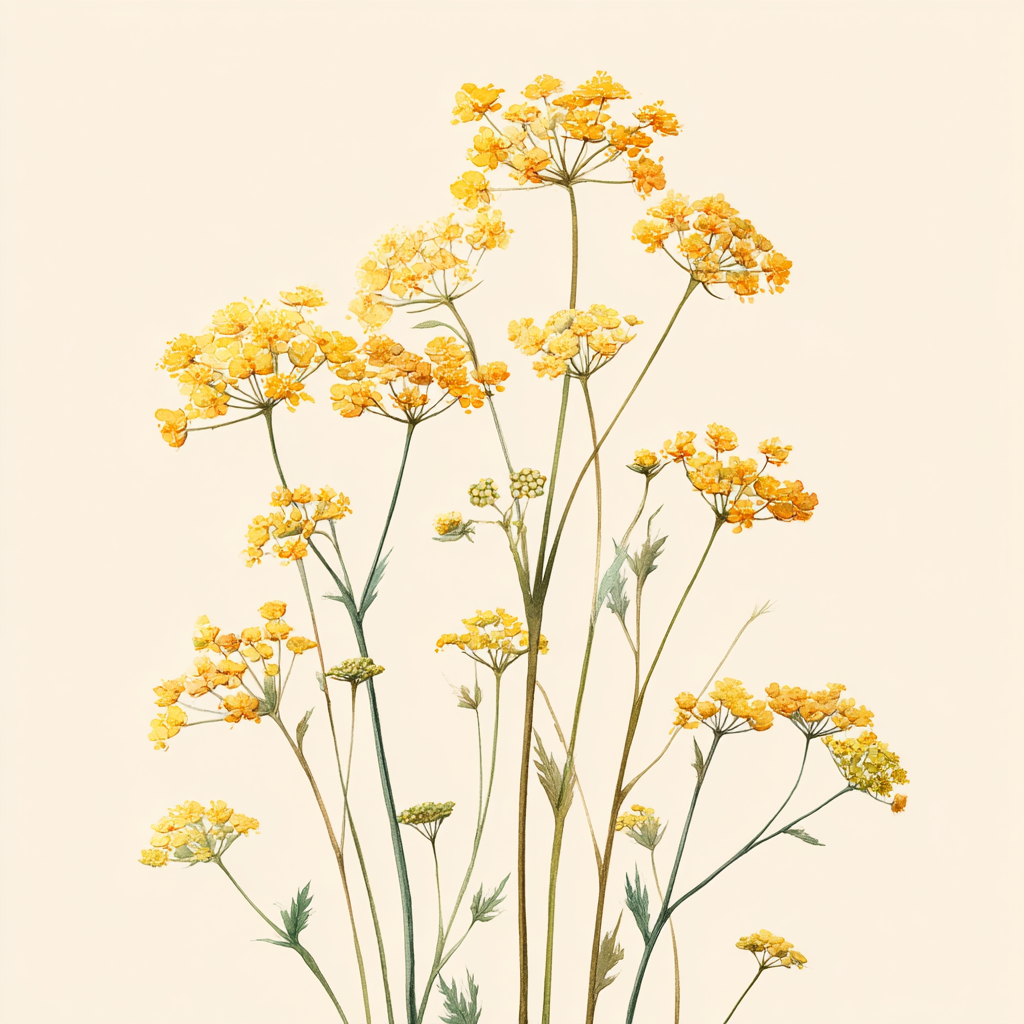
Bright golden-yellow in flat-topped compound umbels 2-3 inches across; bloom April-June depending on zone.
Fruit
Small, flattened, ribbed schizocarps typical of the carrot family; ripen July-August; self-sow slowly.
Natural History
Natural History
Zizia aurea is native across a wide range from Quebec and Saskatchewan south to Florida and Texas, growing naturally in moist prairies, open woodland edges, and meadows. The genus was named for Johann Baptist Ziz, an early 19th-century German botanist. As a member of the carrot family, it shares the distinctive compound umbel flower structure that makes it attractive to small native bees, wasps, and flies that cannot reach nectar in tubular flowers. Modern pollinator research has identified it as a critical early-season resource for queen bumblebees, mason bees, and mining bees that emerge in April before most flowers are available. Despite this ecological importance, it remains far less familiar in native plant gardening than later-blooming species.
Loading photo submission…