Black Gum
FlowerNyssa sylvatica
Have seeds for this? Add to inventory →Black gum is one of the most ecologically valuable and visually spectacular native trees, producing some of the earliest and most brilliant fall foliage of any North American tree - blazing scarlet red weeks before maples color. Its inconspicuous early-season flowers are among the most important honey and pollen sources for native bees in the eastern forests, and its small blue-black fruit are a critical high-fat food source for migrating songbirds including thrushes, waxwings, and vireos. Long-lived and stately, it is a garden centerpiece and habitat cornerstone in one.
Growing Conditions
Growing Conditions
Sunlight
Full Sun to Partial Shade
Water Needs
Moderate
Soil
Moist, well-drained, acidic soil preferred; pH 4.5-6.5; tolerates wet conditions and periodic flooding but also grows in average garden soil
Spacing
240 to 360 inches
Days to Maturity
First fruiting in 8-10 years; fall color develops reliably from the first year
Growing Zones
Growing Zones
Thrives in USDA Zones 4 - 9
When to Plant
When to Plant
Transplant
Plant young container-grown stock in spring; black gum develops a deep taproot early and resents transplanting as it ages - always buy small and plant young
Harvest
Not harvested for culinary use; berries extremely sour and bitter; consumed by wildlife
Phenology (Natural Timing Cues)
Transplant
Plant black gum in early spring before bud break from young container stock. This species develops a deep taproot quickly and must be transplanted when small (ideally 2-6 feet tall) for reliable success. Fall planting is possible in zones 6-9 but spring planting gives the taproot a full season to anchor.
- Early spring: forsythia in bloom, soil thawed and workable
- Deciduous trees showing bud swell but not yet leafing out
- Soil temperature above 40°F at 6-inch depth
- Last frost date within 2-3 weeks
Start Dates (Your Location)
Average dates use your saved zone; readiness also checks your forecast when available.
Best Planting Window
Spring window
Spring
Plant early enough for roots to settle before summer heat.
Autumn window
Usually skip autumn planting
Use spring unless you have locally grown nursery stock and enough mild weather for roots to establish.
Planting Method
Use nursery-grown planting stock rather than treating this as a standard seed-starting crop.
Critical Timing Note
Plant early enough for roots to establish before weather stress arrives.
Use the average timing, but check your local forecast before planting.
Organic Growing Tips
Organic Growing Tips
Always buy small container-grown trees (4-6 feet) and plant young; large specimens develop deep taproots that make transplanting nearly impossible.
Fall color begins earlier than almost any other native tree - often by mid-September - providing a stunning garden focal point.
The flowers are so attractive to honeybees and native bees that black gum honey is considered a premium product in the south.
Mulch the root zone with 3-4 inches of acidic mulch (pine bark or shredded oak leaves) to maintain soil acidity and moisture.
Care Guidance
Optional seasonal guidance for what you can do, even when nothing is urgent.
Care Guidance
Watering
If the top 2 inches of soil feel dry, a deep watering at the base may help more than frequent light watering. In healthy soil, rain may cover much of what it needs.
Feeding
Extra feeding is rarely required if soil is healthy. If growth looks pale or slow, a light compost top-dressing is often enough before adding anything stronger.
Pruning
If pruning is needed, dormancy or the period just after harvest is often the simplest window. Dead, damaged, or crossing growth is usually the first place to start.
Seasonal care
In late fall, a light cleanup and fresh mulch can help if winter protection is useful in your climate. Leaving a little space around crowns and trunks often helps air move and keeps excess moisture from sitting there.
Known Varieties
Common cultivars worth knowing
Known Varieties
Wildfire
Selection with new spring growth emerging reddish-purple before turning glossy green; fall color as brilliant as the species. Good uniform form.
Best for
Ornamental specimen; fall color display; four-season interest
Straight Species
The wild-type black gum; maximum ecological value. Plant from local seed source whenever available for best climate adaptation.
Best for
Wildlife habitat; bee forage; spectacular fall color; long-lived specimen tree
Companion Planting
Companion Planting
Good companions
- Wild Ginger
- Native Ferns
Support & insectary plants
Nearby plants that attract pollinators, beneficial insects, or improve soil health.
- Spicebush
Attracts pollinators and beneficial insects
- Swamp Milkweed
Attracts pollinators and beneficial insects
- Cardinal Flower
Attracts pollinators and beneficial insects
Avoid planting near
No known conflicts
Common Pests
Common Pests
- Black Gum Leaf Minor
- Scale; generally very pest-resistant once established
All pest management in Garden uses safe, organic, non-toxic methods only. No synthetic pesticides, ever.
Native Range
Native Range
- Origin
- Native to eastern North America.
- Native Habitat
- Moist forest understories, swamp margins, river bottoms, and upland slopes from southern Maine and Ontario south to Florida and west to Texas.
- Current Distribution
- Widespread across eastern North America within its native range; increasingly used as a landscape tree for fall color and wildlife value.
Taxonomy
Taxonomy
- Kingdom
- Plantae
- Family
- Tupelo family (Nyssaceae)
- Genus
- Nyssa
- Species
- sylvatica
Morphology
Morphology
Root System
Stout, deep taproot with spreading laterals; very difficult to transplant once established; must be planted young.
Stem
Single-trunked tree reaching 30-60 feet with horizontal branching; dark, deeply furrowed bark resembling alligator hide on mature specimens.
Leaves
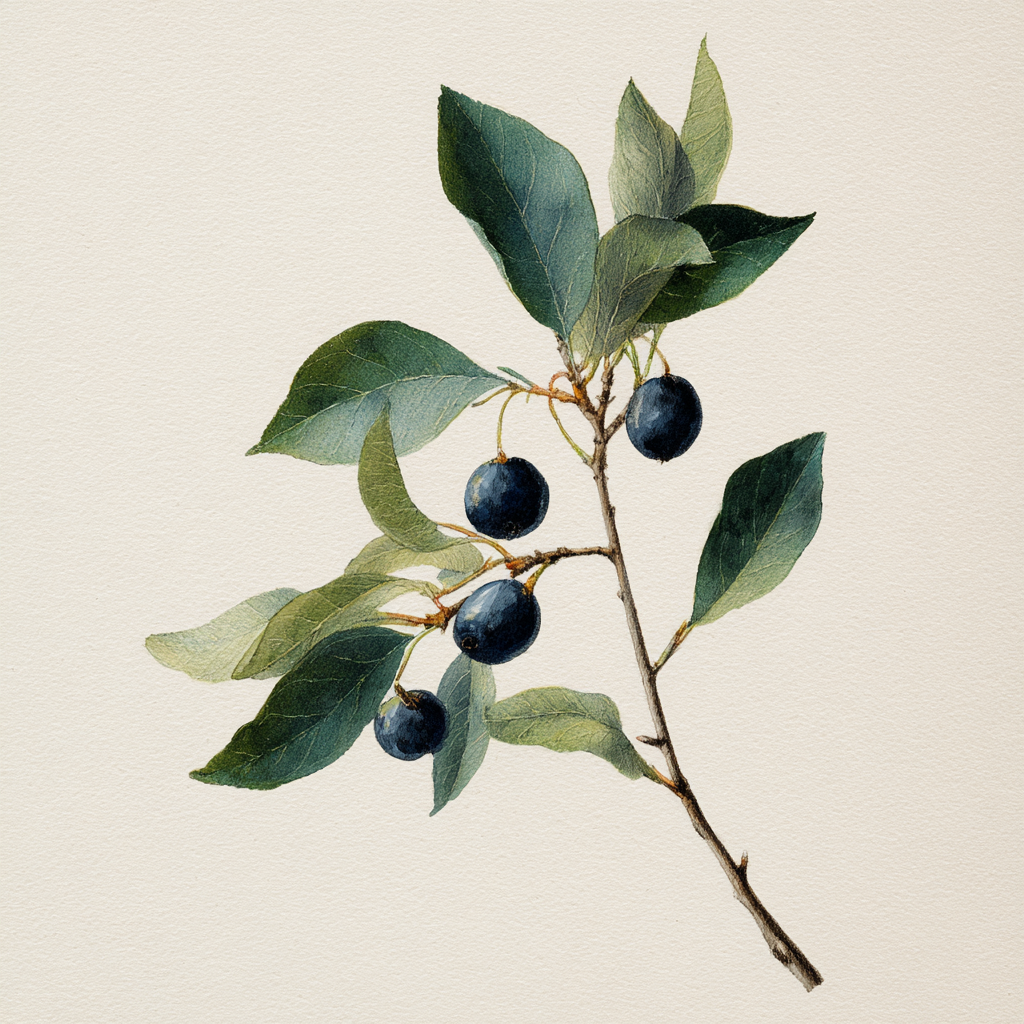
Alternate, elliptic to obovate, 3-5 inches long with smooth margins; lustrous dark green; turning brilliant scarlet-red in early fall.
Flowers
Small, greenish-white, borne in clusters in May-June; inconspicuous but extremely attractive to honeybees and native bees.
Fruit
Oval blue-black drupes, 1/3-1/2 inch, in clusters of 2-3; ripen September-October; bitter to humans but high-fat food for migrating birds.
Natural History
Natural History
Nyssa sylvatica is native across a wide range from southern Maine and Ontario south to Florida and west to Texas, growing in moist forest understories, swamp margins, and upland slopes. It is one of the longest-lived trees in eastern North America, with specimens documented at over 650 years. The genus name Nyssa refers to a water nymph, reflecting the species' frequent association with moist and swampy sites. Black gum honey, produced when bees forage on the inconspicuous flowers, is prized in Appalachian beekeeping traditions for its mild, slightly fruity flavor. The tree's exceptionally interlocked wood grain made it nearly impossible to split and was historically prized for wheel hubs, maul heads, and containers.
Loading photo submission…